Thursday, 9 April 2020

How to manage a relationship during isolation

Here in UK on the 23rd March, Prime Minister Boris Johnson put the country under lockdown, banning all non-essential travel and telling people to stay at home unless they meet one of a few criteria.

These include shopping for food or medication, travelling to work as a key worker or your once-daily form of exercise. With many of us now being made redundant, being on furlough, working from home full-time or simply looking after children due to school closures, this is an impact on our relationships. 


I, myself, realise the dramatic change in the routine, the flow and the dynamic within the family. 

But whether that is a couple who are both working from home, a whole family with children who need to be entertained or housemates who are finding communal living difficult, it is not yet known how long these measures may last. While it is not yet known, I have read that divorce lawyers have already forecast a spike in splits later this year due to self-isolation.


I was wondering and looking for any ideas of how to do better since it is surely not wrong to look out for advise. I found out that Aidan Jones, chief executive at relationship charity, Relate, says: “Our relationships will be hugely important for getting us through this unprecedented time but self-isolation, social distancing and concerns about issues like finances may also place them under added pressure.” 

So how can you ensure tensions do not arise and if they do, are quickly dispelled? That is what I found:

With your partner: 


Don’t make assumptions about how the other person feels

The coronavirus is unprecedented, not only on a societal level but for your relationship – you may have dealt with testing times before but this is likely to be a new experience. Relationship therapist Aoife Drury says the key is not to assume the other person will feel the same way about everything you’re going through. “Often we feel that others are experiencing the same emotions or thoughts that we are. 

“Assumptions breed resentments as they lay down false expectations. The antithesis to assumptions are clear and open dialogues so avoid mind reading. None of us have experienced this before so we will all cope with this differently and that’s okay.”

Keep communicating

With so much going on and tensions running high, it can be hard to keep an open dialogue – especially if you’re feeling scared or upset. But Drury says it is key to keeping your relationship solid throughout. “This heightened anxiety may create strong negative emotional reactions; anger or frustration. When experiencing these emotions try and stay mindful of your responses. 

If you’re struggling with your anxiety and how you respond, the best thing you can do is communicate. Giving yourself time or telling your loved ones you’re struggling and that you may react uncharacteristically. Of course this doesn’t justify being cruel but helps ease the possibility of reacting in a way that you might regret and add to stress.

Relationship psychotherapist Kate Moyle tells The Independent: “Communication is key. Try and be as clear as possible with each other. If you are frustrated or stressed then try to use ‘I’ statements to communicate how you are feeling. ‘I feel’ is very different to ‘When you x, I x’ or ‘You make me feel’, it’s very easy to slip into the blame game when we are stressed and it doesn’t help anyone.”

Accept these circumstances are going to be testing

Aidan Jones from Relate says that you do need to give yourself some period of grace – this is an unusual time for everyone. “Understand that with the best will in the world, rows are quite likely in these circumstances. It’s how you deal with them that counts. If you tend to argue or bicker then accept that you may transfer that onto what you each think about the virus.

“You may want to know as much as possible about the situation whereas your partner may prefer to take each day as it comes. Remember that there are many different ways of coping in stressful situations and your way isn’t the only way.”

Try to put big arguments on hold 

Although it is normal to expect some tension during this ongoing situation, you shouldn’t use it as a chance to vent all of your ongoing relationship issues says Jones, some things will need to be parked. “Big and difficult conversations may need to be put on hold while you deal with the current situation – this is especially true if one of you is ill or thinks they may have symptoms,” he says.

“You may have elderly parents or other family members with health problems and you may have particular worries about these people. Try to understand if your partner needs to prioritise these people at the moment. Choose your battles and weigh up if they are worth it at this time.”

Ensure you aren’t just working all the time

If you and your partner are struggling to manage working from home and your relationship then try to establish clearer ‘home life’ and ‘work life’ from now on. Moyle says that it can be hard at the beginning to separate the two and this can have a detrimental impact. 

“If you are working at home, there will still be home and life admin to do – set a time for this. It may feel like the house is a tip or needs cleaning, but make an executive decision to do this outside of ‘working hours’. Many of us will struggle with working from home as it limits our capacity in different ways, so try not to pile extra home stress on work stress.”

Murray Blacket, a couples counsellor, says: “If you are working from home try to establish a routine. Don’t work all day in your pyjamas. Make sure you build in breaks – tea, coffee, meals. If you have a garden go outside for an oxygen break. Don’t work all hours”. 

Moyle also recommends finding shared interests or activities to do together so that you have something to share that isn’t just housework, like a new Netflix series. 

For the whole family 


Establish a routine

It can be tricky to establish a routine when your whole day happens within four walls but it is crucial for long-term success. Drury says: “The brain loves patterns and hates randomness, so to give it some patterns to ease it.

Moyle agrees: “Make your own routine. Children especially thrive on routine, but it’s helpful for adults too. It can be particularly challenging if there is more than one of you working from home, so try and carve out time to be spent together and time to be spent apart. E.g. at 11am you all sit down and have a coffee together.”

Set family goals and expectations 

Couples therapist Dr Kalanit Ben-Ari says now we know we’re likely to be indoors for a long time, sit down with your family – especially your children – and discuss how this is going to work. 

For example, children will be expected to do homework at this time, or help with laundry and the dishwasher. “If you and your partner are now working from home, be aware that this is a change of the unspoken contract between you. Talk about expectations and if you need to change up certain responsibilities,” she says.

Dr Ben-Ari also thinks this is a good opportunity to come up with a family project. “[It is] a great way to occupy everyone and do the things you’ve wanted for years but didn’t think you had the time. Organise all your old family photographs into photo books – the perfect way to reminisce, bond and pass the time.”

Designate areas of the house 

Psychotherapist Lucy Beresford says even if you live in a one-bedroom flat you should try to designate different areas as ‘work’, ‘chill-out’, ‘privacy’ and ‘interaction’. 

“If you are not living alone, sit down quickly to draw up rules about these spaces, so that your partner or flatmate or child know what happens where. You wouldn’t go to the loo in the kitchen sink, so similarly everyone needs to know that ‘that sofa is for chill-out’ not for work.

Moyle suggests making activity corners in different spaces. “ It will help you to feel that you are doing things differently. Have a book or reading corner, an art corner, a building games corner.”

While making these spaces, Blacket says it would be a good idea to make a “timeout zone” – this isn’t necessarily just for children. “When we are stuck close together the opportunity to be by yourself for a while is important,” he says. Take a short break in this space and do something you want to do for yourself – whether this is writing a diary or watching a quick TV show.

Don’t avoid answering kids questions about coronavirus

Many parents probably feel like they don’t want to talk anymore about the coronavirus – especially as it is the reason you are stuck in the house in the first place. But if children have legitimate questions and you refuse to answer them this could cause more tension.

Drury says: “Kids are smart and will have lots of questions. Shutting down questions will only create confusion, upset and anxiety. Talking to them about what is happening in a factual way can alleviate that. Take your cues from your child and prepare but don’t prompt for questions.”

Treat each other with kindness 

Regardless of who you are sharing your home with during self-isolation, every relationship can be improved with kindness. Beresford says: “Recognise that everyone is going to be feeling some strain. Even children who are delighted to be off school will sense there is a negative backdrop to it all. Practice gratitude, and daily thank those around you. 

“Pat yourself on the back every day for what you have dealing with, and extend such generosity of spirit to those you live with. If you feel yourself about to snap at anyone – or berate yourself – try the ‘5 second breather’ technique: inhale for 5 seconds, hold for 5 seconds, exhale for 5 seconds.”

Source: Independent

Friday, 6 March 2020

Let's Talk About the Coronavirus


We need to talk about the coronavirus, so I thought I send out my opinion about this via my blog.

Personally, I prefer to live my life by the maxim "most emergencies aren't." Adhering to this sentiment, I avoid overreacting or panicking. Of course, every so often, there are real emergencies. Even then, it's better to prepare than to panic. We never look in the rearview and wish we would have panicked more.

As of today, we are unsure whether the novel coronavirus, aka COVID-19, is a widespread emergency or an overreaction. To be clear, it's already an emergency for some. Many people have died, many more are ill, and many healthcare providers are risking their lives to keep people alive. And there’s a significant likelihood it will get worse in the coming months.

While you and I don't know whether we'll be directly affected, we’ll certainly be indirectly affected. The stock market is tanking, factories are ceasing production, stores are running out of inventory, schools and museums are closing, and many public gatherings are being canceled or postponed. To date, ITB Berlin, IMEX Frankfurt, the NBA & NFL suspended their entire season. FIFA World Cup Qualifiers are postponed, several music gigs and festivals cancelled. Hundreds of other events, conferences, and rallies have shuttered under the threat of infection.
Covid-19 has also made its way to Scotland, with the first case in the region confirmed on 1 March. In that same consideration for safety, I consider to postpone meetings, planned visits for my familie's and my own safety. Flights have been cancelled from/to Edinburgh and Glasgow and the travel and event industry doesface a massive impact in the industry already.

While all of this can be extremely aggravating, these setbacks are mere inconveniences in the grand scheme of things. The actual problem might be far more serious than shifting around our calendars—it might mean changing how we live for the foreseeable future. As we learn more about the severity of this pandemic, I'm being vigilant by:
 
  • washin my hands with soap and water often – I do this for at least 20 seconds 
  • I always wash my hands when I get home or before i eat
  • I use hand sanitiser gel if soap and water are not available 
  • I cover my mouth and nose with a tissue or my sleeve (not my hands) when I cough or sneeze 
  • I put used tissues in the bin immediately and wash my hands afterwards  
  • I try to avoid close contact with people who are unwell
That might sound like the hyperbole of a hypochondriac, but this is unlike anything we've seen in our lifetime. According to the NHS and as of 9am on 12 March 2020, 29,764 people have been tested in the UK, of which 29,174 were confirmed negative and 590 were confirmed as positive. Eight patients who tested positive for COVID-19 have died. The government published its coronavirus action plan on 3 March. An update on numbers worldwide you will find on the website here.

Look, I know our individualistic society is not very good at slowing down or self-regulating. But we must. At least for a while. It’s no longer about just you and me—we must consider everyone else. Which seems like a paradox when we talk about "social distancing," but, right now, one of the best things we can do is love people from afar. Because even if you aren't worried about the virus yourself, you can transmit it to others if you're not careful, and spreading the disease will lead to greater human suffering.

LET'S NOT PANIC, but let's be cautious and act accordingly. Even from a distance, we are all in this together. And if you are, indeed, panicking, please remember, it is possible to take this seriously, but also to lighten the mood with a little humor!

Monday, 24 February 2020

Phoenix’ Speech Was More Than A Speech

“I think we’ve become very disconnected from the natural world. Many of us are guilty of an egocentric world view, and we believe that we’re the centre of the universe.”

This have been just one of many inspiring and very true words of Joaquin Phoenix latest speech at the Oscar Award Ceremony as he accepts the best actor Academy Award for his role as the damaged clown Arthur Fleck in Joker. 

Description


Source: Youtube

Forever alone in a crowd, failed comedian Arthur Fleck seeks connection as he walks the streets of Gotham City. He transforms himself into a tortured and mentally unstable loner driven to highly inhumane acts of violence—against humans—in pursuit of a quixotic stand-up comedy career. On camera his cackling laughter, sheepish grin, and slow-blinking eyes channel unexpected heartbreak and humanity in a DC Comics villain from Batman—in fact, erasing any trace of comic books and instead presenting a character study of a fevered vigilante suffering from mental illness, alienation, narcissism, and latent rage. Directed by Todd Phillips as an homage to grimy 1970s and ’80s classics, especially those made by Martin Scorsese with Robert De Niro (who costars), the film’s artful depiction of an alienated white man performing acts of nihilistic savagery has already rekindled the conversation over the relationship between Hollywood violence and the real-life kind seen last summer in El Paso, Texas, and Dayton, Ohio.

Phoenix mostly wants to let the film speak for itself. “There’s so many different ways of looking at it,” Phoenix says of the Arthur Fleck/Joker character. “You can either say here’s somebody who, like everybody, needed to be heard and understood and to have a voice. Or you can say this is somebody that disproportionately needs a large quantity of people to be fixated on him. His satisfaction comes as he stands in amongst the madness.”


Phoenix has always had an intuitive feel for the dark side of the human psyche. In Lynne Ramsay’s You Were Never Really Here, from 2017, he played a damaged hit man who kills rich men who rape underage girls by hitting them with a ball-peen hammer. Before that, in Spike Jonze’s Her—during which he met his fiancée, costar Rooney Mara—he was a lonely depressive who finds love in his computer’s operating system. In 2010, he flummoxed everyone by playing a semifictional version of himself as a self-destructive actor trying to build a hip-hop career for the mockumentary I’m Still Here—a movie that further complicated the line between reality and fiction when director Casey Affleck was sued for untoward behavior by two female crew members—before returning with a bravura performance in The Master, as the unhinged devotee of an L. Ron Hubbard-like quasi-religious leader. That began a run of finely wrought indie performances.

Observing the darkness in his work, it’s tempting to look for its source in his personal history. It wasn’t long ago that he was still being referred to as “the second most famous Phoenix,” his name associated most closely with the death of his cult-legend brother, River, in 1993, which Joaquin witnessed, along with sister Rain, in front of the Viper Room on Sunset Boulevard, then co-owned by Johnny Depp. The public memory of his brother has faded enough that Joaquin is now the most familiar Phoenix, but the tragedy is never far for Joaquin himself. In part that’s because reporters never stop asking him about it. But he was also deeply influenced by his brother, and by his death, even if he remains reluctant to draw a straight line between his unusual background and his private tragedy and his talent for inhabiting the morose, damaged, violent, and otherwise anxiety-riddled characters he takes on—roles he seems vividly made for.


Phoenix has recently undergone hypnosis to quit smoking, a habit he took up as a teenager, but it doesn’t seem to be working out. His fingernails are chewed to nubs and he keeps two packs of American Spirits and several lighters close at hand. “I eat really healthy,” he says. “I don’t really like junk food. I don’t like processed foods. Right? But I still can—like, I’ll fuck up a bag of chips. Like a fuckin’ Subway sandwich and shit.” For Joker, he went on an extremely restrictive diet—advised by the same doctor who helped him lose weight for The Master—and lost 52 pounds. After the film, he gained back 25, but the oily image of his severe, wraithlike body in the trailer for Jokerarrived like a shock last spring, evidence that Phoenix had once again gone all in on a role. 

As Arthur Fleck, Phoenix leans into his physical features, from the scar on his upper lip (not a surgically fixed cleft, he says, but a nonsurgical scar he was born with) to his leonine gaze, sad-sack grin, and distended shoulder, which he was also born with. Phillips told him he looked like “one of those birds from the Gulf of Mexico that they’re rinsing the tar off.” “He’s got the most interesting form,” he says. “He’s so beautiful.”


To develop the character of Arthur Fleck, Phoenix did research on narcissism and criminology and studied the movements of Buster Keaton and actor Ray Bolger, the scarecrow from The Wizard of Oz,which inspired the highly creepy dance that so acutely expresses Fleck’s private madness. During one scene, the screenplay called for Fleck to shut himself in a bathroom after several murders, looking for a place to hide his gun. Phoenix and Phillips decided it didn’t feel right, and while they discussed the scene, Phillips played Phoenix some newly composed music for the movie. Phoenix began dancing, an elegant, tango-like movement, and Phillips asked the cameraman to start filming with a handheld camera, just the three of them in the room while a crew of 250 waited outside. The scene became part of an eye-popping trailer, set to a Jimmy Durante tune, “Smile.”


DescriptionForever alone in a crowd, failed comedian Arthur Fleck seeks connection as he walks the streets of Gotham City. Arthur wears two masks -- the one he paints for his day job as a clown, and the guise he projects in a futile attempt to feel like he's part of the world around him. Isolated, bullied and disregarded by society, Fleck begins a slow descent into madness as he transforms into the criminal mastermind known as the Joker.

DescriptiForever alone in a crowd, failed comedian Arthur Fleck seeks connection as he walks the streets of Gotham City. Arthur wears two masks -- the one he paints for his day job as a clown, and the guise he projects in a futile attempt to feel like he's part of the world around him. Isolated, bullied and disregarded by society, Fleck begins a slow descent into madness as he transforms into the criminal mastermind known as the Joker.

Sunday, 16 February 2020

Cobbler, stick to your trade

The ever changing event and tourism industry causes a lot of confusion when it comes to the actual job titles and duties. Over the years, we’ve learned that the destination management industry is a mystery to many. If you have questions about DMCs and what in the world we do, you’re not alone (...even our own friends and family have a hard time grasping the services we provide!) As Event & Destination Manager myself I often have to explain what exactly I do.   


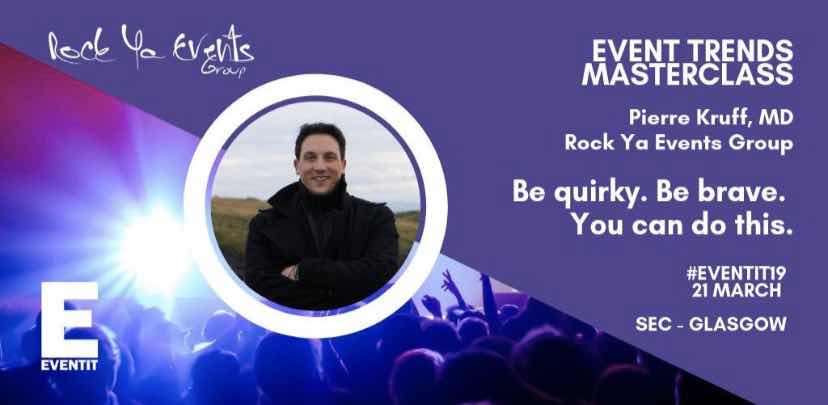
In March 2019 our I have hosted a masterclass highlighting what event really means, what the purpose of an event is and why an Event Manager can be of great help when it comes to marketing strategies. People in this day and age seem to get easily confused with the term of Event Management and how it takes place within a decent marketing strategy. A lot of people also assume that meeting or event planners are a one-size-fits-all solution for any kind of corporate event, large or small, and to some degree, they’re correct. 

But there’s a subset of event planners who specialize in Congress Organisation (so called PCO = Professional Congress Organiser) and some who specialize location-specific events that call for attendees to travel (so called DMCs = Destination Management Companies). 

The DMC type of planner does a whole lot more than make an event sing; it pulls together a cohesive series of events — and events between events — without so much as a bump in the road, no matter how long the journey and no matter where the locale. So it is clearly an individual expertise and therefore a different task within the planning industry. 

In travel and tourism terms, DMO stands for Destination Marketing Organization. They represent destinations and help to develop their long-term travel and tourism strategy. DMOs come in various forms and have labels such as "Tourism Board," "Convention and Visitors Bureau," and "Tourism Authority." They are typically part of a political branch or subdivision in charge of promoting a specific destination and enticing and servicing MICE (stands for Meeting Incentive Conferences Exhibitions) travel. DMOs play a key role in the long-term development of a destination, by formulating an effective travel and tourism strategy. 

For the visitor, DMOs serve as a gateway to a destination. They offer the most current information about a destination’s attractions. They're a one-stop shop, maintaining a physical presence where visitors can engage with staff, obtain maps, brochures, information, and promotional books and magazines formulated by the DMO and its clients. A DMOs online presence is particularly important. Statistics show that leisure travelers search a number of online sources during their trip-planning activities. DMO websites that maintain current calendars, list of hotels, events, and other practical travel information are extremely valuable to prospective leisure visitors. Some of the leisure groups are also FIT groups. 


FIT (Free Independent Traveler) is an individual (or small group of <10) traveling and vacationing with a self-booked itinerary. FIT travel is not done as a member of a traditional guided tour not via a marketed package combining transport (air, rail or bus), lodging/hotel, entertainment or local transport (rental car for use at destination). For the travel industry, the business model is driven by prominence of FIT's. The Long Tail of Travel emerges in the presence of some or all of the following:

  • wider access to information e.g. the internet
  • word-of-mouth to establish trust in taking "the path less traveled", sometimes facilitated by social media
  • lowered jet fuel costs 
  • stable consumer finances


Here is a step-by-step break down of the difference between a DMC and an event planner when putting together a company event:


In general terms, an event planner plans events, a meeting planner plans meetings (blog post). A DMC, though, does a litany of things: event/program design, tour/excursion planning, logistics planning, transportation management, service oversight, supplier management, and accounting. In other words, a DMC’s expert team will customize a full program from start to finish, utilizing the best resources the location has to offer and drawing on the unique features of the city or town to make the experience effective, memorable and fun for all involved (blog post).


While meeting and event planners are adept at putting together the nuts and bolts of a gathering, the element of destination management fills in all the gaps from beginning to end — local tours between meetings, transportation to and from the airport, partnerships with the best local eateries, tourist attractions and more.


The primary difference

Want your executives to sink their teeth into some phenomenal local cuisine with personalized service from the top chef in the city? A DMC can arrange that in a snap. Need a fleet of luxury vehicles or an upscale coach to get the team from point A to point B, C, D, E and then off to their departure gates when all is said and done? Again, a DMC is the way to go, since those are the sorts of run-of-the-mill tasks these local connoisseurs handle every day. They can (and do) act as site selection partners, creative designers, event marketers, tour guides, welcome ambassadors and more. Much like a concierge on a grand scale, they leverage their deep knowledge of (and relationships with) top local vendors to negotiate discounts while tailoring every aspect of a multi-day event to meet its guests’ specific needs. In the months leading up to the program, they can be a brand’s greatest ally, and the partnership only strengthens as the big event arrives, executes and wraps up with a group of happy campers heading back home.


What services does a PCO provide?


PCOs provide a variety of services, below is an indication of some of the main services you can expect from a PCO:


• Advice and guidance

• Strategic consultancy

• Assisting with bidding process

• Venue selection and negotiation

• Financial management and budgeting

• Tax and exchange rate issues

• Abstract Handling and speaker communications

• Registration and logistics

• Marketing, communication & social media

• Sponsorship and exhibition sales

• Project management

• Technical management (AV, IT, WIFI, etc.)

• Assistance with scientific programme

• Accommodation negotiation and bookings

• Special social events/banqueting/other catering functions

• Risk management & security issues

• Administration of Congress communication

• Onsite communication/delegate Apps etc.

• Ground handling/logistics

• Pre and post tours


What services does a DMC provide?

DMCs provide a variety of services, below is an indication of some of the main services you can expect from a DMC:


Destination Consultancy

• Destination selection - The DMC provides advice and information about the chosen destination, the advantages and disadvantages for a specific meetings type, group size, and the level of security, climate and all the local elements contributing to the success of the association’s meeting.


• Matching destination to association objectives - The DMC, as the local expert, is the insider and in close cooperation with the association selects and matches the destination depending on the association’s objectives.


• Creation and design of meeting - The DMC creates together with the association the desired theme in and around the meeting, assists with the choice of locations, materials and food, depending on the association’s wishes and budget.


Ground Handling

• Meeting, staging and AV management - The DMC offers their own AV equipment if available or selects the best local provider that matches the standards expected and budget available.


• Accommodation - The DMC acts as a local expert and consultant for accommodation issues providing necessary information, booking system.


• Welcome, gala and off-site functions - The DMC acts as local expert and consultant by providing information on prices, discounts, venues etc.


• Airport transfers and hospitality - The DMC arranges all necessary transport by land, sea or air in the destination. Some DMCs will own their own fleet of buses and/or cars, while others will know which local providers will best meet the association’s needs and budget.


• Social Programme - The DMC will carefully tailor the social programme to the needs of the meeting and all delegates, taking into consideration the season, budget and theme of the meeting.


• Speaker logistics and management - The DMC provides speaker assistance - from accommodation, transport, social programme and-, tours, etc.


• Sourcing of local staff - The DMC sources or outsources local personnel - from multilingual staff to industry experts or amateurs that are familiar with the topic of the meeting.


• Design and print management - The DMC assists in or manages the design and printing of all material, respecting the association’s standards and gives advice on trends and options. This part is usually outsourced from a local provider, but can also be managed in-house.


What services does a DMO provide?

‘DMO’ is a newer term that is used in order to be more transparent about how the organization helps planners and other groups. The DMO can provide assistance in scouting, negotiating, and supplier vetting. Some DMOs market only to leisure travelers, while others market solely to meeting planners.


• oversee, create, and implement marketing campaigns and promotions to inspire travelers to visit their destination

• advocate for increased investment to enhance the visitor experience.

• formulate campaigns to attract conventions, meetings, and events to their destination.

• work closely with meeting planners to plan events that display the destination and its attractions in the most favorable and enticing manner.

• interact with leisure, vacation, and MICE travelers, meeting professionals, conventioneers, business travelers, tour operators, and travel agents with both FIT (Free Independent Traveler) and group travel clientele.


The end result

When you’re bringing a group of professionals together in a city that isn’t their own, the effectiveness of the conference, summit or team-building event can hinge as much on the “in-betweens” as it does on the main event itself. As attendees are able to let their hair down together during thoughtfully-curated excursions outside of those daily meetings, bonds form. As they enjoy the local delights of the city they’re in, they learn new things about one another and strengthen their working relationships. And if they’re able to sleep well in the best local hotels, have all their meals planned to perfection and avoid the usual hassles of getting around an unfamiliar place by enjoying pre-arranged transport, they’ll be at their best when it counts.

A good DMC actually has a resounding effect on the attendees’ experience the entire time they’re away from home. In the end, it means an efficient, extraordinary experience for attendees and a glowing set of reviews for the host when everyone departs.


Given the amount of time, energy and money that goes into a major company event, the only gambling that should ever take place is placing your bet on a winning event partner. Now that you’re familiar with the difference between a DMC and an event planner, feel free to check out this company:


www.2b-uk.com